With the arrogance of youth, I determined to do no less than to transform the world with Beauty. If I have succeeded in some small way, if only in one small corner of the world, amongst the men and women I love, then I shall count myself blessed, and blessed, and blessed, and the work goes on. -- William Morris

Tuesday, October 31, 2006

Inculturation Through The Ages VII: Some Short Thoughts On All Saints And Halloween

When one looks at the history of the Feast of All Saints, one finds a rather confused image of how it began and how it developed. That is because there are many layers to the celebration, and what is true at one place in a given time might not be true at a different place in that exact same time.

It is difficult to pinpoint its origin. Evidence from the homilies of St John Chrysostom suggests that a celebration of the feast developed in the Antiochian tradition sometime before his reign, therefore, sometime in the fourth century. The Eastern celebration of All Saints follows this Antiochian tradition, and commemorates the feast on the first Sunday after Pentecost.

How then did the Western martyrology place this feast on November 1st? The answer to this question requires us to look to the Western origins of this feast.
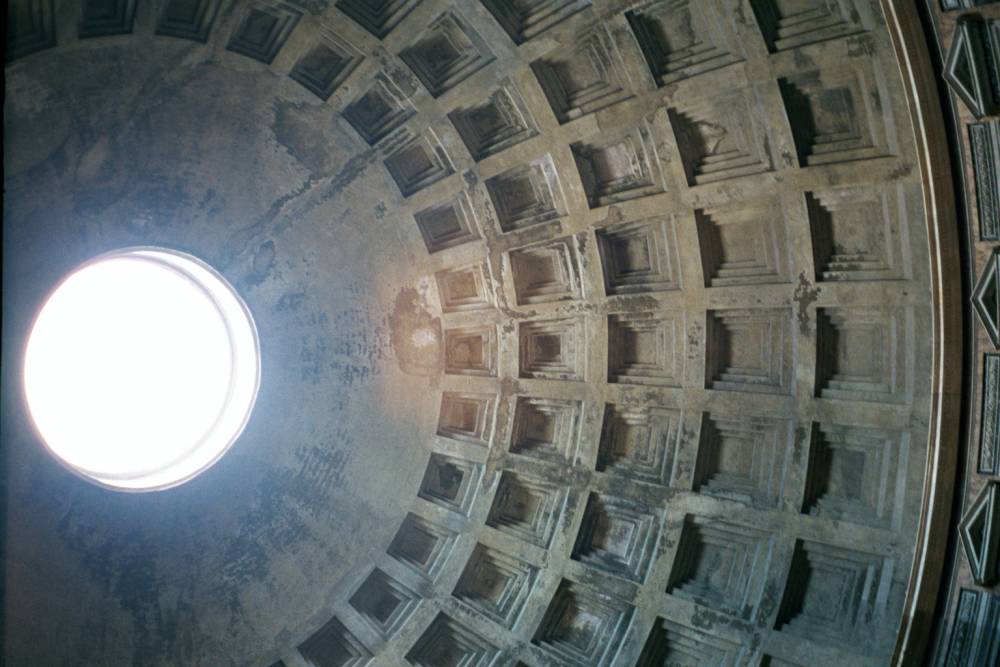
In 609, the Pantheon was given to Pope Boniface IV, and was turned into the Church of Mary and the Martyrs. The Pantheon was one of the great architectural achievements of Rome, and it was created (as the name suggests) as a place to worship all the Roman gods. The Pope consecrated the Pantheon on May 13, and turned May 13 to be an annual feast of all the martyr. In Edessa, we find May 13 was already a feast day celebrating the brave deeds of the martyrs, so perhaps Boniface took this in account (it would be a great coincidence if he did not) when he transformed the Pantheon from being a temple to all the gods to a church of all the martyrs.

In this transformation, we can see the Pope is engaging in an ingenious attempt of inculturation. The Pantheon was a popular pilgrimage site, and an important pagan temple. Pagans felt the need to honor all the gods, in part because they wanted whatever benefits the gods could give them, but also because there is an inherent inclination in humanity to honor those who we perceive to be great. We think they are worthy of our respect, and we should manifest that respect in some manner. To the pagan mind, who can be greater than the gods? Who can deserve our respect more than the gods? This inclination is itself good, but needs to meet its proper end: God. But this does not mean, and in fact should not mean, that if someone is not God, they do not deserve our honor and respect – far from it! Thus, not only should our worship and adoration go to God, but it is natural to also honor those who have done great deeds, like the martyrs who suffered so that the Church could thrive. In consecrating the Pantheon to Mary and all the martyrs, Pope Boniface took what was good in the old Roman worship and transformed it, showing how cultural traditions can be used for the glory of God. This is exactly what inculturation is about, and this shows us how inculturation has been an ideal since the earliest of times.

Now, after the time of the persecutions, subsequent saints were seen as one of the martyrs, not because they suffered and were killed for Christ, but because their life was lived out in such a way as they became an example or witness (martyr) for Christ in the way holiness can be achieved through our interaction with grace. All saints therefore are martyrs if one looks to the meaning of the word martyr (explaining why the official record of saints and their feasts is a martyrology).

Now, the movement in the West from May 13 to November 1 did not happen all at once. There seems to be many elements at play here, and not all of them demonstrate inculturation in the way the Western origin for the feast indicates. For example, it seems that in Rome, the feast was moved to November 1 by Pope Gregory III when he dedicated a part of the Basilica of St Peter to all the Saints. Slowly through Western Christendom this date would be used, and it was not until Pope Gregory VII (1073 – 85) that May 13 was suppressed and November 1 became used universally in the West.

Many believe that the change of date from May 13 to November 1 was done for the sake of the Irish. Of course, this would seem odd: why change a universal feast for one small corner of Christendom? Nonetheless, this does not mean that within Ireland Christians did not take advantage of the cultural situation to reinforce the meaning of All Saints. Therefore, even if it was not changed universally to November 1 as a means of inculturation, this does not mean inculturation was not involved in how it was adapted in Ireland.

What kind of inculturation are we talking about? In the Celtic tradition (in Ireland, Scotland, and Wales), around we find an end of summer festival, Samhain, being celebrated for several days, starting on October 31. Some nineteenth century speculation on the festival believed it was also a time when the Celtic year changed, but there is debate upon that point by modern scholars. What is not debatable, however, is that in the Celtic tradition, this was an unusual time of year, a time when the Gods and the dead dwelt closer to the world we lived in. It was a time when the dead could be contacted and seen moving around us. It was also a dangerous time, as the darkness is setting in, bringing evil in its wake. Bonfires were lit as a kind of protection from evil. It was also a time of the harvest, and harvest celebrations. In their mirth, families not only took joy in their bounty, but also took of the season to reflect upon the dead, and honor them.

It is not hard to see why this tradition could fit well with the Christian celebration of All Saints. The Celts rightfully had a sense of the awe and mystery which could easily be transferred from the gods to Christ and his saints. Moreover, with All Saints, there developed a secondary tradition, inspired by the Benedictines and Carthusians, that is, of All Souls, a memorial service for the dead. In the development of Christian tradition on the place and experience of the dead, All Souls took upon itself as a time of help and aid for the dead, a time to pray for them, a time to help bring them closer to beatification. This easily fit with the themes surrounding Samhain, and helped ferment with the Celts the notion that the new Christian religious tradition was an adaptation of their local customs, and allowed for a continuation of themes and ways of celebrating the time to be transferred from the old pagan rites to the new Christian tradition.

Halloween, All Hallow’s Eve, the Eve of All Saints, as it is commonly understood in the English tradition, is inspired by this inculturation of Celtic traditions by the Christian feast. Yes, we can find pagan remnants in the Christian feast, but this shows what was good and holy in the pagan tradition can and does receive its home in the Christian tradition. Sometimes those remnants, as we see with the Celts, were added to the feast either by local custom or by missionary work, sometimes these remnants can be found at the heart of the feast. Medieval Europe was ripe with inculturation. Because it is often the culture we find ourselves living in and associated with, we often do not realize it. Looking back, and seeing how the Christian sympathies blended with the previous pagan traditions, it should give us pause and wonder – how much inculturation should be done from above? That is, how much of it should be invented by someone who thinks they know how the adaptation should be done, and then “forced” upon the people whose culture we are trying to adapt because we think “this is how it works,” and how much of it should be done from within and lived out? True inculturation needs to be organic, like we have seen in history, where the Christian faith meets the inclinations of the nations of the world. Perhaps one of the reasons why modern attempts of inculturation make many cringe lies not with the idea of inculturation, but by the inorganic way it has been tried of late. Many such attempts look forced transformations, perhaps with a beautiful exterior, but in their core, they are shallow without substance.

Labels: ,

Friday, September 15, 2006

Inculturation Through the Ages IV: Robert de Nobili in India

One has to know the Veda of the Lord – but also act ccordingly. It is as if someone knows the way to the reach the city but, because he does not take the way, he never reaches the city. So too, if one knows the Lord’s Veda but does not act accordingly, he will not reach liberation. -- Roberto de Nobili, “Dialogue on Eternal Life,” in Preaching Wisdom to the Wise. Trans. and ed. Anand Amaladass and Francis Clooney. (St Louis: The Institute of Jesuit Sources, 2000), p. 234 – 5.


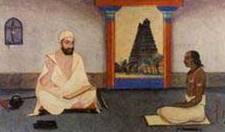
Speaking like a guru to one of his disciples, Robert de Nobili might appear as if he were a Hindu ascetic telling how one obtained moksha: Listen to the Veda, do what it tells you to do, and you will be liberated.

While this is the way he portrayed himself in India, Nobili was a Jesuit missionary. To him the Veda or revealed wisdom of the Lord was the Christian Scriptures. Hindu intuition was correct in looking for such a holy text. And they were correct in thinking it would be the guide for liberation or salvation. Hindus were prepared for the Gospel, and Christians were ready to provide it to them.

Born in 1577, Robert de Nobili joined the Jesuits in 1597, was ordained a priest in 1603, and arrived in Goa in 1605 only to be the base of departure for his work in Southern India. He took a considerable interest in Indian society and culture. A year after his arrival in in India, he studied Sanskrit, Tamil, and Telugu, and became competent in all three of them by 1607. He came to believe that if Christianity is to be preached in India, Christianity would have to understand Indian society and its cultural practices. Converts should not be expected to abandon their traditions just because they converted to Christianity. Such expectations would only cause Christianity to be rejected because its way of life would be seen as a practical impossibility. Any such convert would be kicked out of the community and quickly perish.

Nobili did not believe every aspect of Indian culture could be accepted by Christians. He made the distinction between cultural norms which are harmless, and religious practices which could contain superstitious error. His model was what was established in the Council of Jerusalem as recorded in the book of Acts. Just as the gentiles were not expected to become Jews and follow Jewish norms, Indians should not be expected to become Europeans. Their cultural practices were, on the whole, compatible to Christian livelihood. Those which are not should either be modified, if possible, or, as a last resort, abandoned.

Nobili took upon himself the form of a brahmin priest, dressing up as the brahmins did, even wearing the twisted cotton thread which indicated he was a sage. He studied Sanskrit and the Sanskrit classics, but he read them within the light of his prior Thomistic education. His writings show how indebted he was to St Thomas Aquinas. St Thomas’s firm commitment to the light of reason allowed him to affirm the good within Indian society, and to use their literature as the starting point for religious discussion. When the question of idolatry came up, like St Thomas, he believed the cause lay on the side of human error and mistake. For example, some idols could have originally been understand as a symbol, but later became confused for the thing in itself:

To show that God has no beginning or end, some drew a circle in their picture. By this picture they did not intend to say that God is round; rather, their intention was to show that just as a circle with its round shape has no beginning or end, so too the transcendent-and-immanent Being has no beginning or end. This was their only intention. […]

But, after a long period of time, a later generation of being who lacked understanding about the transcendent-and-immanent Being and were dull-witted starting calling the round-shaped figure, the circle itself, God. Even though some did not [explicitly] equate the circle with God, in their confusion they accepted the idea that God has a round shape.
--Ibid, 302 - 303.


Nobili’ adventure in India was quite successful. He was able to establish, despite much contention from his peers, an Indian form of Christianity. He was respected by the Indians for his wisdom and learning. But in doing so, he had to often set himself apart from the rest of his Jesuit order, because they did not, like him, go native. He believed such an association could confuse his converts. Would they eventually be expected to imitate the European way of life?

We must point out that initially his mission was controversial. From 1612 -1623, he had to defend his methodology with his superiors and various ecclesiastical authorities in India and Rome. Moreover, during this time he was not allowed to receive converts until a decision was made upon the validity of his work. Because of this controversy, he developed a theory to defend inculturation, a work of ingenuity way ahead of its time. He distinguished cultural customs from religious activity. While they certainly influence one another, they are not the same. If one were to reject all customs that were practiced in non-Christian religious devotion, then one could not do anything as simple as eat or drink, because some non-Christians had eating and drinking as part of their religious devotion. One must distinguish what aspect of the act is permissible, and what aspect (perhaps a prayer or incantation) is not. This distinction allowed him to gain the support of Rome in 1623, a support which he had until his death in 1656. It also allowed him explain why various customs long equated with Hindu practices were, to him, acceptable as long as the intention was approrpiate.

Labels: ,

Monday, September 04, 2006

Inculturation Through the Ages IIIB: The Syrian Mission to China


Let us praise the Dharma:

Dharma King John, Dharma King Luke
Dharma King Mark, Dharma King Matthew
Dharma King Moses, Dharma King David,
Dharma King of Easter, Dharma King Paul
Dharma King of the Thousand Peacock Eyes
Dharma King Simeon, Dharma King Mar Sergius,
Dharma King George, Dharma King Mar Barsauma,
Dharma King Simon, and the Twenty Four –
Dharma King Henana, Dharma King Hosea
Dharma King Michael, Dharma King Silas
Dharma King Gur, Dharma King Announcing Teachings – John.

Martin Palmer, The Jesus Sutras. (New York: Ballantine Publishing Group, 2001), p.184.

There is just something about China that has caused many Christians to incorporate into their religious message the vast riches of its civilization. The Jesuits in China were not the first to attempt a synthesis of the Christian message with Chinese culture. The first large-scale missionary endeavor into China came from the Assyrian Church of the East (known also as the Chaldean Syrian Church of the East) and her missionaries took considerable effort in translating the Christian message to the religious and philosophical outlook they found in China. During the life of Matteo Ricci, Neo-Confucian thought took precedence, and the Jesuit missionary took on the role of the Confucian scholar, granting him a place in the ranks of the cultural elite of his day. The Syrian missionaries took a rather different approach.

Around 635, Christian monks, led by Aleben, crossed into China via the Silk Road. The emperor, the rather enlightened Taizong, was interested in their mission, and wanted a translation of the texts they carried with them to be placed into his ever-expanding imperial library. He was more than a little impressed with what the monks had told him. He heard from them about their faith in a savior who liberates humanity from the darkness of sin. From this description the emperor entitled their faith in Chinese as “The Luminous Religion.”

Being given an imperial welcome, they were given the grounds and finances necessary to build their first monastery and to begin translating their sacred texts. For the next several generations, the monks were given considerable prominence and respect in China. Even though Christianity slowly spread among the Chinese, the mission was not a failure. Monasteries were being built throughout China: early texts suggest one was built in every province, later texts, one in every major city.

The Christians found themselves to be in a far from an ideal situation. They were outsiders, and outsiders in China were often feared. The xenophobic in China grouped them with other foreigners, such as the Manicheans, as being a bad influence to the state. Not only did Christians have to defend themselves from the attacks of native Taoists and Confucians, they had to be able to differentiate themselves from other religious traditions trying to make their way into China at the same time.

By the time the Christians had entered China, the most successful foreign mission in China was done by the Buddhists, and many of their ideas had already entered the general Chinese milieu. Even though it had been in China for centuries, Buddhists were still entering the land, bringing new religious texts with them, translating them for their faithful. It is rather difficult to explain, but in the midst of these two differing missions, the Christians, under the leadership of the 8th century Ching-Ching from Chang-an, undertook a cooperative work with an Indian monk, Prajna, to translate the Buddhist Satparamitta Sutra into Chinese. Prajna knew Sanskrit but had difficulty with Chinese, and welcomed Ching-Ching’s willingness to help him translate the text into Chinese. Their collaboration was stopped, not by Christians or Buddhists, but by the emperor who thought the two religious traditions should not be so easily mixed.

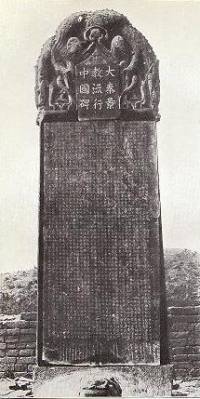
Ching-Ching, however, is important to us, because he represented the Syrian Christian mission at its height. He erected the famous monument of 781, giving us not only a glimpse of the history of Christianity in China, but also the way Christianity engaged the Chinese intellectual tradition in the way earlier Church Fathers had engaged Hellenism. His catechetical and liturgical texts are among the few texts that have been recovered from this ancient Christian mission. They indicate how inculturated the Chinese mission had become, taking significant Taoist and Buddhist themes as a means to express the teaching and work of Jesus.

Ching-Ching indicates that Jesus’ message can be summed up into four laws: non-desire, non-action, non-virtue, and non-demonstration. Similar to the Buddhists and Taoists, desire is seen as an alienating force the defiles the mind and causes us to sin. We must put an end to our desires, that is, as Jesus said, we must die to the self. This means we must engage in non-action. Non-action here means that we need to rely upon the natural goodness of creation, sustained by the Messiah. Like a ship at sea, the Christian must rely upon the driving force of the Messiah, and if they resist the work of the Messiah by their own activity, they will be like a ship struggling against the wind. Non-virtue means we should not rely upon our own virtue, but be at rest in the work of the Messiah. It is not, as it might sound, moral relativism. Rather, it points out that virtue is natural, and when we seek virtue, we create an unnatural understanding of what it means, an attachment to an incomplete, and thus false, view, and so end up struggling against the grain to achieve what, through the Messiah, should be natural in and through him. Non-demonstration means we should not seek to create systematic, conceptual “truths,” which restrict one’s mind from seeing a pure vision of reality. We must abandon ourselves, even our own thoughts, and be open to the full revelation of the Messiah. Anything else, including our own feeble attempts at moral or intellectual superiority, will only fail. In this way, one can see a Christian anthropology which combines a radical vision of grace with Taoist and Buddhist ideals. Jesus is expressed as the Sage who is himself the Way, the Tao.

The Syrian mission came to an end from several outside factors. The first was the advent of Islam. The second was a new xenophobia within China which persecuted and kicked out foreigners (which included not only the Christians, but Jews, Zoroastrians, Manicheans, and even the Buddhists). With their homeland controlled by the Muslims, the Syrian Church of the East was not able to support their Chinese mission. They were, more or less, on their own. When the Chinese took on a hyper-nationalistic ideal in the 9th century, the mission could not successfully keep itself open, and by 845, no functioning church could be found within China (cf. Palmer, 236). A few Christians remained within the region, but they were incapable of restoring the mission. Interestingly enough, under the Khans, the Syrians would again have one last brief renaissance in China, but it would prove a little to little a little too late.

Labels: ,

Saturday, September 02, 2006

Inculturation Through the Ages III: The Jesuits in China

Perhaps the most sophisticated and exotic cultures Christians encountered in their missionary activities were in India, China, Japan and the rest of the Asian landscape. This provided for unique challenges to Christians, making them reconsider their own cultural prejudices. Previously, it was easy to equate the way Christianity had developed in Europe as establishing what it meant to be Christian. Thanks to the Christian influence, European civilization advanced to new heights, and missionaries impressed indigenous peoples with their cultural refinements.

This changed when Europeans began serious missionary activity in Asia. While they had much to offer Asian nations, the Asian nations also had much to offer Christians in return. St Francis Xavier (1506 - 1552) in his travels across Asia came to understand that Christianity would only be accepted by Asians if Christianity was willing to adapt itself to their own cultural standards. Christianity could not succeed in Asia if it tried to turn Asians into Europeans before making them Christian. According to Joseph Sebes, this necessity occurred to St Francis Xavier only after his disputed with Buddhists in Japan:


The Japanese response helped Xavier realize that for Christianity to succeed in Asia, missionaries had to reach the natives on their own terms: speak, read, and write the native languages; become an integral part of a particular civilization and behave like the natives of that country – or, as will be said later, “Become Chinese to win China for Christ.” -- Joseph Sebes, S.J. “The Precursors of Ricci” in East Meets West: The Jesuits in China, 1582 – 1773. Ed. Charles E. Ronan, S.J. and Bonnie B. C. OH (Chicago: Loyola University Press, 1988), p. 23.

From his travels across Asia, St Francis Xavier realized that (outside of India) the central focal point of Asian civilization was in China. Its influence was felt throughout his travels, and the people he encountered often wondered why, if Christianity were the true religion, China with its ancient cultural heritage knew nothing of it. In order to reach the rest of Asia, Christians had to impress the Chinese.

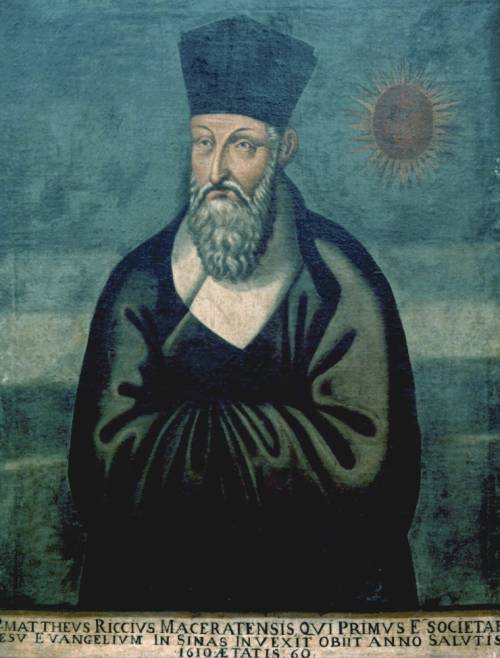
While the Franciscans had already sent missionaries into China, Christianity would receive wider acclaim and acceptance in that land only after the missionary work of the Jesuit priest Matteo Ricci (1552 – 1610). Understanding the ideal established by St Francis Xavier, Ricci took to heart that Christianity must adapt itself to the Asian sphere if it is to be accepted by the Chinese. His first idea was to have his band of Christian missionaries come into China looking and acting like Buddhist monks. Interestingly enough, while this allowed the Jesuits to achieve limited success in China, they impressed the Chinese more by their technical, scientific lore than with their attempt to act as Buddhist monks. The Chinese came to see them as exemplars of a Western scholarly tradition. One early Chinese convert suggested that the Jesuits should take this seriously, and that instead of coming across as other-worldly Buddhists, they should try to equate themselves with the Confucian elite. Following this advice, Ricci developed a rather intricate foundation for Christianity based upon the Confucian classics.

Through Ricci’s efforts, the Chinese believed Christianity contained the same moral and cultural tradition as was prescribed in their literary classics. Christianity helped provide new justification for traditional morality in a society which beginning to question itself. The emperor respected Ricci and his Jesuit companions because he saw them as helping him in his desire to keep the empire together.

Ricci certainly desired the Chinese to equate Christianity with their cultural tradition. Not only did he study and learn it, but he wrote catechetical material using the ideas found within the Chinese classics as a way to preach the Christian faith. He changed his outward appearance so as to appear as a Confucian sage, but the Chinese took the transformation to be more than an external gloss, and they respected him as being as competent as any of their own sages. He knew that this respect was only honorary.

In China, there was an imperial examination system set up to determine one’s competency within the classics, and the rare individual who passed a rigorous series of examinations would be given a governmental post. Ricci, seeing that the respect he had earned as an individual could not be passed down to others, made sure he would have literati among the converts, and they would continue to study the classics until they passed the imperial exams.

Ricci’s success lay not only with his willingness to outwardly adapt himself to the Chinese norms, but that he also looked within the Chinese cultural tradition, respected them for their own inherent strengths, and tried to show where they could be united with and strengthened by the Christian message.

We must understand, however, this instance of inculturation was not without controversy. It was an innovation. As their mission in China developed, the Jesuits were willing to accept many traditional Chinese practices, such as ancestor worship, as something a convert can continue to practice, with a few caveats in place. They developed a Chinese form of Christianity, with its own rites and practices, but this form of Christianity became challenged in Europe. Supporters of the Chinese Rites, as they were to be called, were found throughout Christendom. Leibniz, for example, supported the ideal established by Ricci, calling him a wise man following the example of Paul (cf.. Gottfried Wilhelm Leibniz. Writings on China. Trans. and ed. by Daniel J. Cook and Henry Rosemont, Jr. (Chicago: Open Court, 1994), p. 67 – 74).

Dissenters were found throughout Christendom as well, and they would eventually win the upper hand. The early success of the Jesuit mission in China failed in part because of the efforts of rival Dominican and Franciscan missionaries in China. They could not accept the method established by the Jesuits, and eventually were able to get it stopped. The Chinese, seeing the Christians squabble among themselves, believed that the moral superiority presented to them by the Jesuits were undermined by the rest of the Christians, and so came to believe that there was nothing special about Christianity in itself. Their interest in the faith diminished as the Christians stopped trying to acculturate themselves to the Chinese

While this history of inculturation presents us a mixed message, the work established by Ricci, following the example of St Francis Xavier, became one the historical ideals that missionaries used when they entered new cultures. The success of the Jesuits among the Native Americans was, in part, because they continued to follow the precedence established by their order in China, a tradition that can trace itself not only to the work of Ricci, but to St Francis Xavier, one of the founding fathers of the Jesuits.

Labels: ,

Thursday, August 24, 2006

Inculturation Through the Ages IIB: The Russian Mission to Alaska

Catholics are not the only ones who have inculturated the faith. What might surprise many, but should not, is that Orthodox missionaries attempted to transmit the faith according to the needs of the peoples they encountered. Even before Vatican II, Orthodox tradition was that the liturgy should be prayed in the every day language of the people. The Orthodox undersand that the liturgy is not only the work of the people, bringing the people together as they worship God in common, but also that the liturgy, as the prayer of the people, is the primary place where we join in with our theological and spiritual heritage. The Christian East holds an old understanding of what it means to do theology: it is the experience we receive when we speak with and pray to God. Our prayers show what it is we believe, and in our communal prayers, we show what it is that the Church has been taught about God and the Christian faith. The Divine Liturgy can be seen as the purest act of Christian theology. How is this possible if we do not understand the words we speak?

Early in the 18th century, Russians discovered Alaska, and by the end of the 18th century, Russia had established a trading colony in Alaska and the scattered island surrounding the mainland. The Russian Orthodox Church saw the need to send priests and monks to Alaska, not only to meet the spiritual needs of the Russian traders, but also to evangelize the natives. The first group of eight religious priests and monks to go to Alaska founded the Kodiak Mission, and saw, to their horror, that the natives were being mistreated by the traders. They sided with the natives against their own kinsmen. By 1796, Hieromonk Makarios returned to Russia with some Aleuts in order to launch a complaint against the way the traders were abusing the natives. Disaster struck the first mission, and either by accident or by martyrdom, one by one most of the eight missionaries were killed. The last survivor was St Herman of Alaska, who developed a close, loving relationship with the Aleuts. He created the New Valaam hermitage on Spruce Island, and continued for more than forty years in his mission with the Aleuts, adapting himself as he could to their culture and tradition, teaching them in their language, and defending them and their rights against the Russian colonists.

Father Michael J. Oleksa, in his online text, The Alaskan Orthodox Mission and Cosmic Christianity, shows us how the early Orthodox missionaries saw the Christian faith as the fulfillment and not the annihilation of the native beliefs:

In Alaska the Valaam monks reported that the Aleuts believed that the which animated the sea mammals they hunted was a sacred reality which had to be treated reverentially. Their Eskimo and Indian neighbors to the north and east shared this belief. The Church could affirm rather than condemn this humble, respectful attitude toward life, for Christ is the life of not just all people. The Church blesses by putting His Name, proclaiming His sovereignty, not just over human life, but over the entire cosmos. It is at this deeper, essentially spiritual level, that the Christian Gospel, proclaimed and celebrated liturgically and sacramentally within Eastern Orthodoxy, converged with the pre-Christian spiritual tradition of ancient Alaska. Christ comes not to condemn but to save the world, and this salvation is a cosmic process inaugurated on Pentecost, continuing to the end of .the age, and fulfilled only in the Second Coming, when He comes not to annihilate but to renew;, purify, and sanctify the world He so loves.

This same remarkable spirit continued in Alaska under St Innocent of Alaska. Born as John Evseyevich Popov-Veniaminov in 1797, he was married in 1817, and ordained a priest in 1821. He volunteered in 1823 to go with his family as missionaries to Alaska. In nearly fifty years of mission work, John was constanlty on the move around Alaska, and he encountered several different native peoples, learned more than six different dialects and local customs, and translated hymns and scriptural texts into the local languages. His interest in the native languages led him to writing the Notes on the Kolushchan and Kodiak Tongues As Well As Other Dialects of the Russo-American Territories. His education of the natives did not end with the proclamation of the Gospel. He took an interest in their welfare, as can be seen in the vaccination program he created for the Tlingits. His wife died in 1838 and by 1840 took monastic vows and changed his name to Innocent. On December 15, 1840 he received the honor of being consecrated the Bishop of Kamchatka and Kuril Islands in Russia and the Aleutian Islands in Alaska. St Innocent, like St Herman before him, loved the natives, and worked for their betterment, while preserving the elements of their culture which he believed were compatible with his Christian faith. To be sure, he took a criticial view on certain aspects of the native religious traditions, and sought to eleminate shamanistic rituals from among the Aleuts. But the Aleuts did not take his action as condemnatory of their people. They saw the love and zeal he had for their people, and welcomed him amongst their own and worked with him in producing a envigorating combination of Russian Orthodox and Aleutian traditions. Some of his works are freely available on the internet at the Alaskan Orthodox Texts website. Even after Russia had sold Alaska to the United States, and many of the Russians traders moved back to Russia, the work started by Sts Herman and continued by St Innocent allowed for the Christian faith to take hold upon the natives, and provided for the foundation by which the natives continued to follow their inculturated Orthodox faith, and even to this day, a majority of the Orthodox in Alaska come from the native peoples.

Labels: ,

Wednesday, August 23, 2006

Inculturation Through the Ages II: The Gospel Among The Native Americans

Our first examination of inculturation takes us to North America, to the work and accomplishment of Catholic missionaries with Native Americans.

Today, it is recognized that inculturation plays an integral part in the survival of Catholicism among Native Americans. Cardinal Arinze in his 1993 Letter to the Presidents of Episcopal Conferences in Asia, the Americas and Oceania pointed out that, “The Church respects the religions and cultures of peoples, and, in its encounter with them, wishes to preserve everything that is noble, true and good in their religions and cultures. To the extent that Traditional Religions are better understood, Christianity will be more suitably proclaimed.” Following Arinze’s recommendation, the United States Conference of Bishops not only founded the Lakota Inculturation Task Force in 1995, but undertook a survey among the Native Americans, trying to find their spiritual and physical needs, and released the results of their findings in the text, Native American Catholics at the Millennium.

It must be pointed out that this is only the continuation of a long, difficult process which begun with the first Catholic missions among the Native Americans. The missionaries had, to be sure, a variety of responses to the Native Americans. Some of them looked upon the Native Americans as savages whose cultures held no redeeming features, and the best way to evangelize them was to force them to adapt European standards. However, a greater number of missionaries, especially among the Jesuits, believed quite differently. They saw sophisticated religious practices and beliefs which often mirrored or complemented Christian beliefs. They actively sought to preserve the varied Native American cultures, recording Native American histories, myths, and rituals while preserving their languages. In part, many Native American customs and traditions continue to this day due to the efforts of these missionaries.

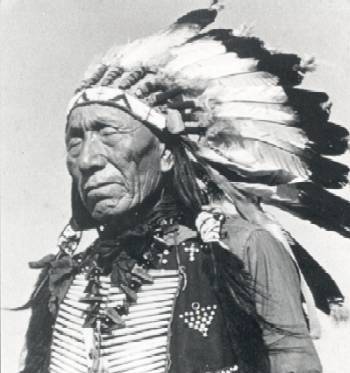
Native American leaders took notice to the respect that Catholic missionaries gave to them, and they in turn asked for a Catholic presence among their reservations. Red Cloud, for example, fought long and hard with United States authorities in order to get a Catholic mission founded upon the Pine Ridge Reservation.

The missionaries struggled to determine what aspects of the Native American traditions could be followed by converts. Could they, for example, partake in the Sun Dance? Some believed that these traditions were superstitious and would have to be given up. Others argued differently, believing that many of the native rituals could be baptized into the Christian tradition. Could not the Sun Dance, for example, be seen as a reflection of the work of Jesus Christ, who, like the dancers, undertook suffering for the wellbeing of his community, the Church?

While the work of the missionaries among the Native Americans actively engaged the same questions that are being asked today about the relationship that can be had of the Native American culture with the Gospel, perhaps it is more telling to note that the Native Americans themselves undertook this question seriously and lived it out in their daily lives.

One of the most inspiring examples of practical inculturation lies in the life and work of Nicholas Black Elk (c.1863 – 1950). From his youth, he was a Wichasha Wakan, an Oglala holy man, visionary, and healer. He learned, and was devoted to, the seven holy Oglala rites (The Sweat Lodge, The Vision Quest, Ghost Keeping, The Sun Dance, “The Making of Relatives,” The Girl’s Puberty Ritual, and The Throwing of the Ball). After his baptism on December 6, 1904, Black Elk continued to be a religious leader, this time undertaking the role of catechist and missionary among his native people. He did not turn his back upon his religious heritage, but saw that God had been at work among the Native Americans before Christianity had arrived, and that the two traditions should be seen as complementing each other. Near the end of his life, he discussed with Joseph Epes Brown about the Oglala traditions, and hoped that by telling about their practice, centered around the sacred pipe, he could be of help in bringing peace to the world, and show how God had been at work among the Native Americans:

Most people call it a “peace pipe,” yet now there is no peace on earth or even between neighbors, and I have been told that it has been a long time since there has been peace in the world. There is much talk of peace among the Christians, yet this is just talk. Perhaps it may be, and this is my prayer that, through our sacred pipe, and through this book in which I shall explain what our pipe really is, peace may come to those peoples who can understand, as understanding which must be of the heart and not of the head alone. Then they will realize that we Indians know the One true God, and that we pray to Him continually. -- Joseph Epes Brown. The Sacred Pipe: Black Elk’s Account of the Seven Rites of the Oglala Sioux (Norman: University of Oklahoma Press, 1989), p.xx.

Black Elk preserved not only the religious and cultural legacy of his people, but sought to unite them to the Christian faith and show how the two traditions could penetrate each other. This he did in the early parts of the twentieth century, representing not only the fruits of the missionary activity among the Native Americans, but also as the first representation we have of how inculturation took place before Vatican Council II. Let us listen one last time as Black Elk speaks:


We should understand well that all things are the works of the Great Spirit. We should know that He is within all things: the trees, the grasses, the rivers, the mountains, and all the four-legged animals, and the winged peoples; and even more important, we should understand that He is also above all these things and peoples. When we do understand all this deeply in our hearts, then we will fear, and love, and know the Great Spirit, and then we will be and act and live as He intends. Ibid.

Labels: ,

Friday, August 18, 2006

Inculturation Through the Ages I: The Foundations

As she carries out missionary activity among the nations, the Church encounters different cultures and becomes involved in the process of inculturation. The need for such involvement has marked the Church's pilgrimage throughout her history, but today it is particularly urgent. Redemptoris missio 52.

A common complaint issued by different sectarian groups about Vatican II is that Vatican II opened up the Church too much to the ways of the world, pagan traditions once rejected by the Church have snuck in, and the Church is slowly being undermined when it tries adapt its message and practices to interact with the needs and expectations of the nations at large. Not only have such criticisms forgotten that Jesus Christ is himself the expectation of the nations, but also that the Church from its inception opened itself up to the gentiles, not only blessing the good that could be found in the gentile traditions, but actively seeking to integrate them into the body of Christ.

St Paul converted St Dionysius the Areopagate on Mars Hill not by denouncing the beliefs of the philosophers, but pointing out that the Platonic unknown God, the God beyond the comprehension of the human intellect, was the same God that the Christians worshiped. He did not seek to divide but to unite.

Early philosopher-Saints such as St Justin Martyr defended the Christian faith upon the same grounds. Christianity was not a complete break from all that had come before it. Christianity fulfilled it and all those who, in their own way, sought for truth and lived out that search to the fullest were seen to be as Christians. Early Christians desired to bring the best of the Hellenistic culture they lived in with the fullness of the Christian faith, and they clearly borrowed from both pagan and Jewish traditions to create their liturgical and theological traditions.

There were throughout the centuries many who were skeptical of this practice. Each generation a new group of Christians would reject attempts made by their fellow Christians to adapt the Christian message and practice to the needs of the different gentile nations. Criticism of St Thomas Aquinas, for example, chided him for looking to pagans such as Aristotle. "We have the fullness of the truth in the Church, what need is there for Aristotle?" What need indeed.

Centuries later, St Thomas Aquinas' theological work came to represent the height of Catholic theology and philosophy. As a rather absurd twist of fate, many of those who believe that the Church has harmed itself by inculturation consider themselves to be Thomists. How can this be? They follow the method of Thomas' critics more than the method of Thomas himself! Closed to the world, they try to hide in the dark museums of antiquity, with a belief of a historical reality which never existed.

In a series of posts on inculturation, we will look at many of its examples throughout the ages, showing how Vatican II is not the end of tradition but its standard bearer.

Labels: ,